

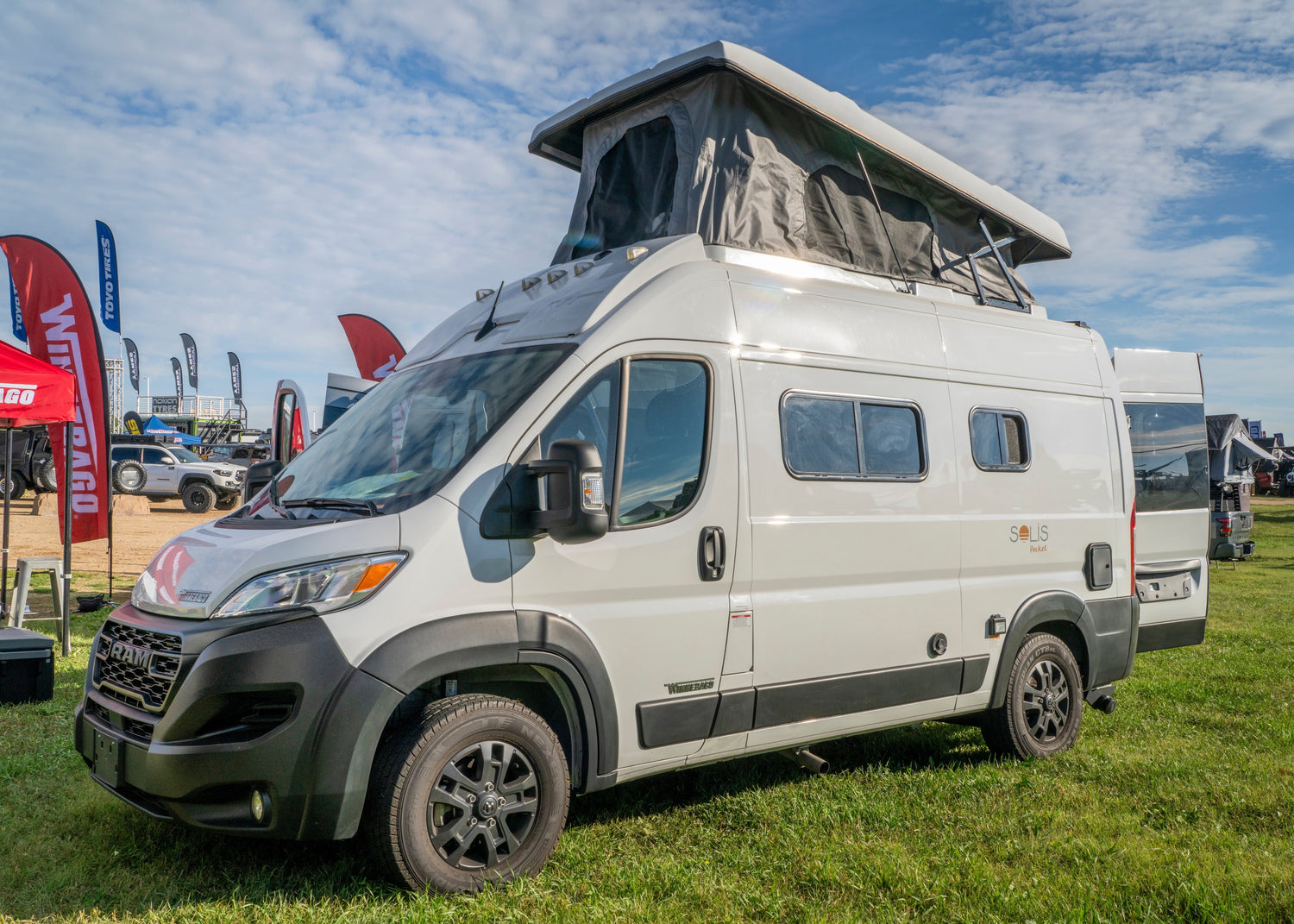
Whichever of the big three you're eyeing, they all have the exact same bathroom problem. The Mercedes Sprinter, Ford Transit, and Ram ProMaster are the three cargo vans behind most Class B camper conversions in the US, and none of them come with a practical way to go to the bathroom — a full plumbed wet bath eats space none of them can spare. A compact composting toilet and portable sink solve this the same way in all three, no matter which one you end up buying.
TL;DR
-
Sprinter, Transit, and ProMaster are the dominant van conversion platforms — Class B camper van searches have been trending up heading into fall.
-
Cargo width between the wheel wells (the number that actually decides what fits in back) is about 53 inches on the Sprinter, ~53.7–54.8 inches on the Transit, and 55.8 inches on the ProMaster — the ProMaster is the widest of the three.
-
A composting toilet needs no plumbing, no black tank, and no dump station — it works identically regardless of which van you drive.
-
Starting prices generally run ProMaster < Transit < Sprinter, though exact MSRP shifts by trim, roof height, and region — check current pricing before you buy.
-
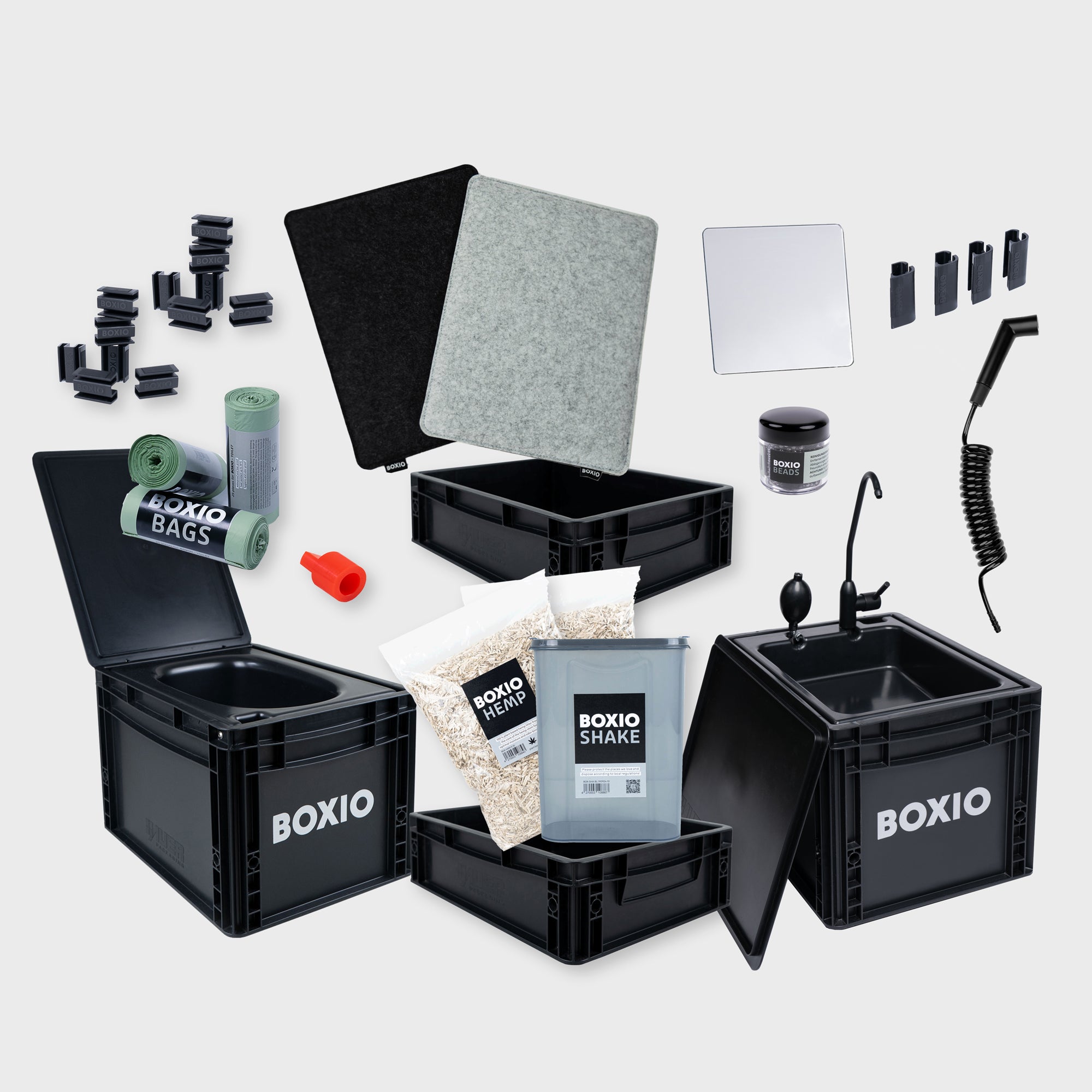
BOXIO TOILET and BOXIO WASH share the same 15.75" x 11.8" footprint, so they fit the same way regardless of which van you're building.
Sprinter vs. Transit vs. ProMaster: Quick Comparison
Interior Width — Why It Actually Matters
The number that decides what bathroom setup fits isn't overall van width — it's the width between the wheel wells, since that's the narrowest point in the cargo box and the real constraint for anything you build in back.
-
Mercedes Sprinter: approximately 53 inches at the wheelhouse on the standard single-rear-wheel 2500 cargo van used in most conversions, with a maximum floor width of about 70 inches — figures that show up consistently across Mercedes-Benz's own dealer specification pages.
-
Ford Transit: roughly 53.7 to 54.8 inches between the wheelhousings depending on trim and roof height, per Car and Driver's 2026 Transit specs.
-
Ram ProMaster: 55.8 inches between the wheelhousings on the 2026 high-roof cargo van, per Car and Driver's 2026 ProMaster specs — the widest of the three, and the reason builders often cite it as the easiest van to fit wide furniture into.
None of these differences matter much for a compact toilet-and-sink setup, though, see below.
Cost Differences
Starting MSRP generally runs lowest on the ProMaster, then the Transit, then the Sprinter — but the spread between trims within a single model can be bigger than the spread between models, since roof height, wheelbase, drivetrain, and dually rear wheels all move the price significantly. Check Car and Driver's Sprinter, Transit, and ProMaster spec pages for current pricing on the exact trim you're considering before you buy — published MSRPs shift throughout the model year.
Why a Built-In Wet Bath Isn't Worth It in Most Conversions
A fixed wet bath — shower, toilet, and sink behind a wall — is standard on Class C and Class A RVs because they have the floor space to spare. In a van conversion, that same enclosure competes directly with your bed, kitchen, and storage, and it locks you into a plumbed system: a fresh water tank, a grey water tank, a black tank for toilet waste, and a way to dump all three. That's workable, but it adds weight, cost, and a dependency on RV dump stations that a self-contained setup simply doesn't need.
The Self-Contained Bathroom Setup That Fits Any of the Three
Composting Toilet — No Black Tank, No Plumbing
A separating composting toilet keeps liquids and solids apart at the source, so there's no black tank, no chemicals, and no dump station required. BOXIO TOILET measures 15.75" x 11.81" x 11" and weighs 6.17 lbs, built from recycled polypropylene, with a solid-waste bin rated for up to 10 uses before it needs emptying, according to BOXIO's own product specs. Because it's a standalone box rather than a plumbed fixture, it sets up the same way whether you're working with 53 inches or 55.8 inches of width — you're placing one compact box, not routing a tank and vent line.
Portable Sink — Real Water Without a Hookup
BOXIO WASH shares almost the identical footprint — 15.75" x 11.8" x 11", 8.38 lbs — and runs on a manual pump, so it needs no electrical hookup and refills at any water tap. Side by side, the toilet and sink take up roughly 31.5" x 11.8" of floor space total, which fits comfortably even in the narrowest of the three vans with plenty of width to spare.
Adding a Shower Option
If you want an actual rinse-off option without plumbing a shower pan into the floor, the BOXIO TENT sets up outside the van and gives you a private space to use the sink as a makeshift shower — useful after a hike or a hot driving day, without adding a wet zone inside the build. For a toilet-sink-shower combo in one purchase, the BOXIO SANITARY bundle covers all three.
Sprinter-Specific Setup Notes
At roughly 53 inches between the wheel wells, the Sprinter is the narrowest of the three at the floor, but it's still more than four times wider than the toilet-and-sink footprint above — the constraint on a Sprinter build is almost always cabinetry and layout, not raw width. The Sprinter's 70-inch max floor width and available high-roof standing height give you room to build a slide-out or cabinet-mounted setup rather than a freestanding one if you want the bathroom gear out of sight when not in use.
Transit-Specific Setup Notes
The Transit sits in the middle at roughly 54 inches between the wheelhousings — enough to run a side-facing bench or galley opposite a toilet-and-sink cabinet without feeling cramped. Builders frequently cite the Transit's boxier interior shape as easier to plan straight cabinetry around compared to the Sprinter's more curved wheel-well intrusion.
ProMaster-Specific Setup Notes
At 55.8 inches between the wheelhousings, the ProMaster gives you the most usable width of the three, plus a flat floor and front-wheel-drive layout that avoids a raised driveline hump running through the cargo area. That extra width is enough to fit the toilet and sink side by side against a rear wall with room left over for a step or storage bin — a layout that's tighter on the narrower Sprinter and Transit.
BOXIO DOORBOARD I Hanging shelf for van sliding door

FAQ
Which van is best for van life? There's no single answer — the Sprinter, Transit, and ProMaster all support the same self-contained bathroom setup, so the choice usually comes down to budget, dealer network, and drivetrain preference (front-wheel drive on the ProMaster vs. rear-wheel drive on the Sprinter and Transit) rather than bathroom feasibility.
Do van conversions need a wet bath? No. A composting toilet and portable sink handle the same function without a fresh/grey/black tank system, and they take up a fraction of the floor space a plumbed wet bath requires.
Can you fit a composting toilet in a Sprinter, Transit, or ProMaster? Yes — a compact unit like BOXIO TOILET measures 15.75" x 11.81", which fits easily within the narrowest of the three vans' 53-inch minimum width.
How much space does a van bathroom setup need? A toilet-and-sink combo like BOXIO TOILET and BOXIO WASH takes up about 31.5" x 11.8" of floor space side by side — small enough to tuck into a corner or cabinet in any of the three vans.
Cassette toilet or composting toilet — which is better for van life? A cassette toilet uses a removable waste tank that needs periodic dumping at an RV dump station. A separating composting toilet like BOXIO TOILET skips the tank entirely by keeping liquids and solids apart, which means no dump station requirement and generally less odor when used correctly.
Ready to Build?
The van you pick decides your budget, your drivetrain, and your layout options — it doesn't decide whether you can have a real bathroom. Read our guide to van life interior design ideas for more on fitting a full build around your setup, or browse the full off-the-grid lineup to plan your bathroom corner first.



Laisser un commentaire
Ce site est protégé par hCaptcha, et la Politique de confidentialité et les Conditions de service de hCaptcha s’appliquent.