

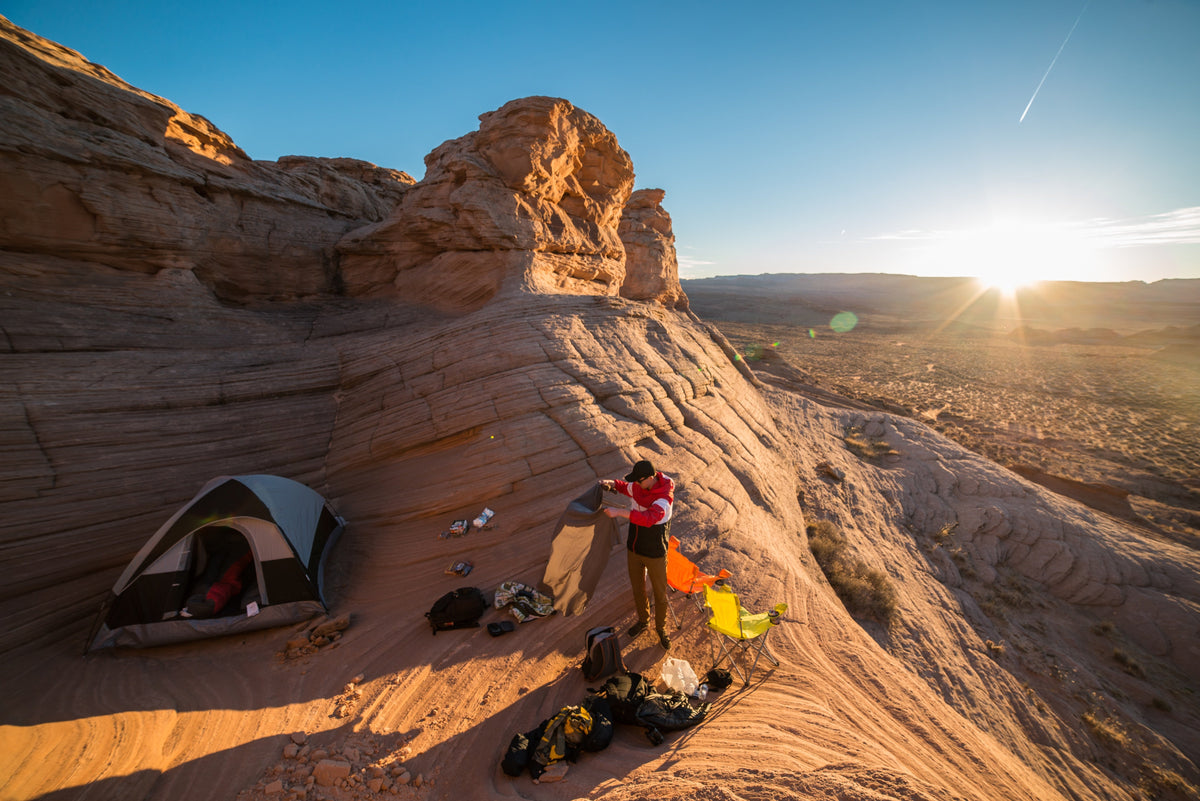
The best campsite you'll find this fall probably isn't in a campground app — it's on public land nobody else bothered to drive to. Dispersed camping means camping for free on public land — BLM or National Forest — outside a developed campground, with no hookups, no toilets, and no potable water. It's allowed on most BLM and National Forest land as long as you follow basic rules, and the trade-off for "free" is that you're responsible for everything a campground would normally provide, starting with the bathroom.
TL;DR
-
Dispersed camping = free camping on BLM or National Forest land, outside a developed campground.
-
Stay limits are generally around 14 days, but the exact window differs by agency, state, and district — always confirm with the local field office.
-
There's no ambiguity on human waste: Leave No Trace calls for a cathole 6–8 inches deep, at least 200 feet from water, trails, and camp — or a portable toilet instead.
-
The BLM's own camping guidance directly recommends visitors "use a portable toilet or pack out your waste."
-
National Public Lands Day falls on September 26, 2026 — a good seasonal hook to get out to a dispersed site this fall.
What Is Dispersed Camping?
The Forest Service defines it plainly: dispersed camping is "camping anywhere in the National Forest OUTSIDE of a designated campground," meaning no piped water, no toilets, and no trash removal (USDA Forest Service). The BLM describes the same setup on its own land: camping away from developed recreation facilities (BLM). RV folks often call the same thing "dry camping," and it's also widely known as "boondocking" — the Forest Service itself uses that term interchangeably in its own visitor materials.
The appeal is obvious: it's free, it's quiet, and it puts you somewhere a $50-a-night campground never could. The catch is also obvious once you've tried it once — there's no bathroom, no water spigot, and no dumpster anywhere nearby.
Where Can You Legally Dispersed Camp?
Both major public land agencies allow it, with slightly different rules:
-
BLM land: Dispersed camping is generally limited to 14 days within any 28-day period. After that, you typically need to move at least 25–30 miles away. Camp within 150 feet of designated routes, stay at least 200 feet from water, and avoid developed campgrounds, trailheads, or picnic areas by at least a mile (BLM).
-
National Forest land: Similar idea, usually 14 days, though the exact rule varies a lot by forest — some allow 14 days within 30 days, others within 60 days or a calendar year. The Forest Service is explicit about the general principle: "You need to be self-contained. No amenities are provided; such as water, restrooms or trash cans" (USDA Forest Service).
Neither of these numbers is universal — they're set at the state or district level — so the one rule that is universal is: check with the specific field office or ranger district before you go.
Why Fall Is a Good Time to Try It
Cooler temperatures, fewer bugs, and thinner crowds make September and October a favorite window for dispersed camping in most of the country. It's also when National Public Lands Day happens — September 26, 2026, the fourth Saturday of the month. Coordinated by the National Environmental Education Foundation, it's the country's largest single-day volunteer event for public lands, with over 900 events and 55,000+ volunteers nationwide in 2025 (NEEF). Some participating federal sites offer fee-free entry on the day — but participation varies by agency and by year, so don't count on a blanket waiver everywhere; check your specific park or field office ahead of time.
The Problem Nobody Plans For: No Bathroom
This is the part that ends most people's first dispersed camping trip early. Both the BLM and Forest Service spell out exactly what you're supposed to do, and it comes down to two options.
Option 1: The Cathole (Leave No Trace Standard)
Leave No Trace, the national outdoor ethics organization, sets the standard most land agencies point back to: dig a cathole 6–8 inches deep, at least 200 feet from water, trails, and camp; cover and disguise it when done; and pack out your toilet paper rather than burying it (Leave No Trace). The Forest Service's own regional guidance gives near-identical instructions, though it lists a shorter 100-foot buffer from water in its own materials — which is exactly why "check the local rule" matters here too (USDA Forest Service).
Done right, this works. Done wrong — shallow hole, too close to water, paper left on top — it's the single most common source of site closures and "no camping" postings on public land.
Option 2: A Portable Toilet
This is what the BLM itself recommends first, ahead of the cathole method: "If possible, use a portable toilet or pack out your waste" (BLM). It removes the guesswork around depth, distance, and soil type entirely, and it's the only realistic option in terrain where digging isn't possible — slickrock, frozen ground, or sites with fragile desert soil.
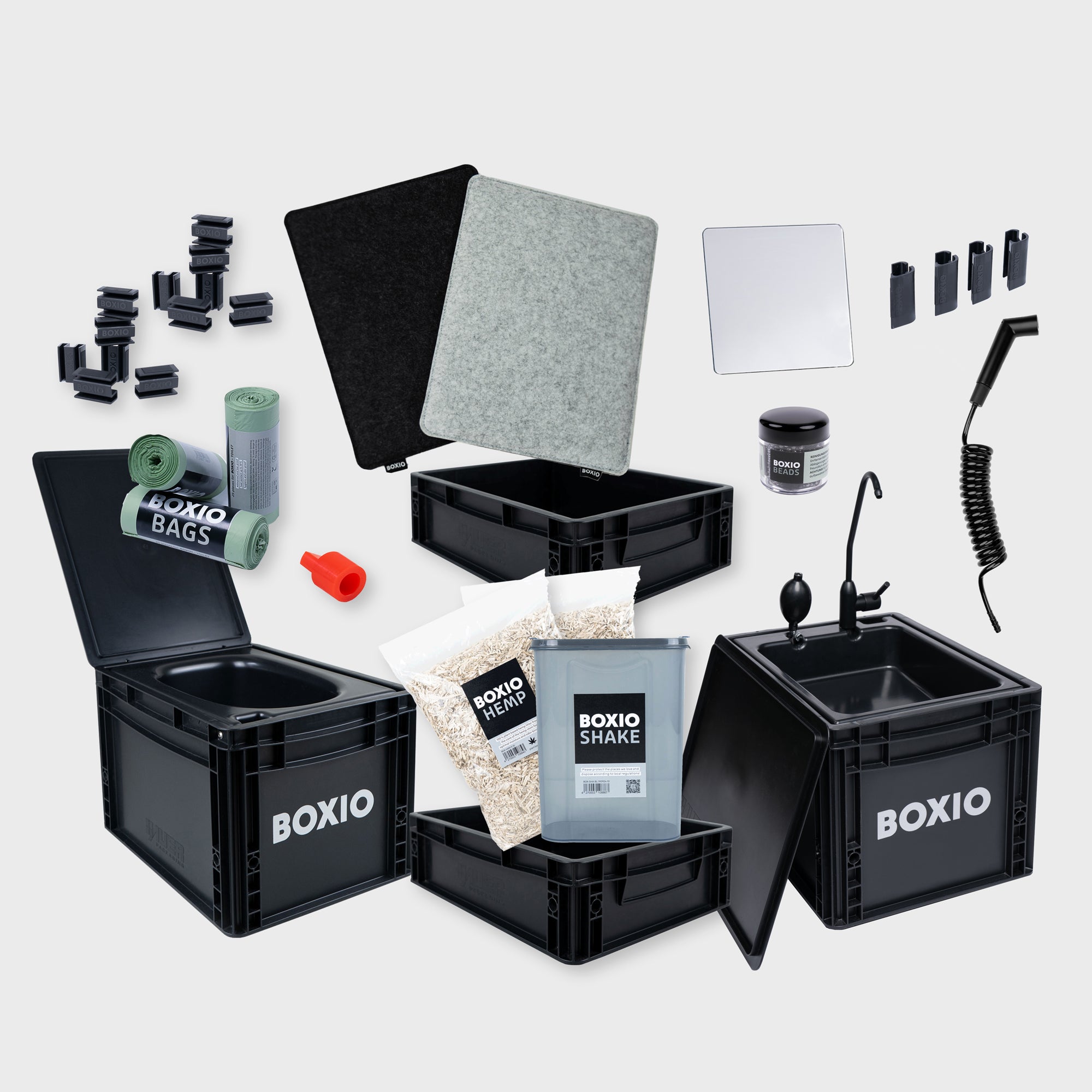
A compact separating toilet like BOXIO TOILET is built for exactly this: no water, no chemicals, and no dump station needed, with the solid-waste container rated for up to 10 uses before it needs emptying, according to BOXIO's own product specs. Pair it with the BOXIO SANITARY bundle if you want the toilet, sink, and shower tent covered in one setup.
Water: The Other Thing Nobody Provides
Neither agency provides drinking water at dispersed sites, and neither considers any natural water source safe to drink untreated — the Forest Service specifically calls out giardia contamination from improper waste disposal and wildlife as an ongoing risk (USDA Forest Service). Bring what you need, and bring a way to wash up without contaminating anything nearby: Leave No Trace recommends carrying wash water at least 200 feet from any stream or lake and using only a small amount of biodegradable soap (Leave No Trace).
A manual-pump sink like BOXIO WASH needs no electricity or hookup and refills at any tap before you head out — useful for dishes, hands, and the kind of quick cleanup that otherwise means driving back to town. If you want an actual rinse-off option at camp, the BOXIO TENT shower tent gives you privacy without needing a fixed structure.
Dispersed Camping Checklist
-
Confirm the stay limit and boundaries with the local BLM field office or ranger district before you go
-
Pick a site that's already been used — don't create a new one
-
Stay within posted distances from water, trails, and roads
-
Bring a portable toilet or know the correct cathole method
-
Pack in all your water; plan to treat or filter anything you collect on-site
-
Pack out every piece of trash, including toilet paper if you're using a cathole
-
Check current fire restrictions before lighting anything
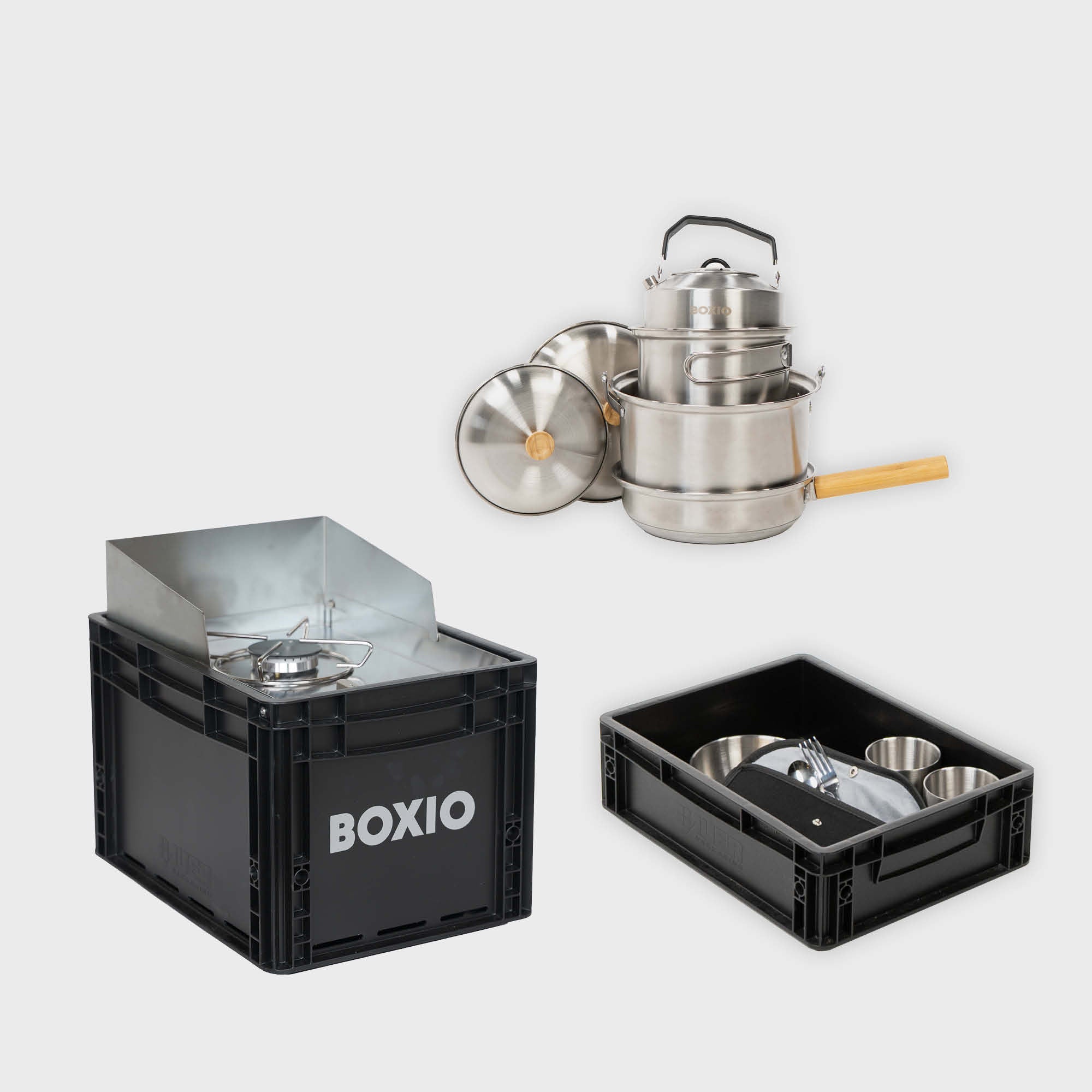
BOXIO COOK Max+ I Hornilla de camping premium con utensilios de cocina y vajilla
FAQ
What is dispersed camping? Camping on public land — usually BLM or National Forest — outside of a developed campground, with no hookups, toilets, or trash service provided (USDA Forest Service).
Is dispersed camping legal? Yes, on most BLM and National Forest land, unless a specific area is posted closed. Rules and stay limits vary by location, so check locally first (BLM).
How long can you dispersed camp on BLM land? Generally up to 14 days within a 28-day period, after which you typically need to move 25–30 miles away — though this varies by state and field office (BLM).
Do you need a permit? Most dispersed camping doesn't require one. Large groups or campfires may need a permit in some areas — check with the local office.
What do you do about a bathroom? The BLM's own guidance recommends a portable toilet first, or a properly dug cathole (6–8 inches deep, 200+ feet from water) as the fallback (BLM; Leave No Trace).
Do composting toilets smell? Not if solids and liquids stay separated, which is the entire point of a urine-diverting design like BOXIO TOILET.
Mark Your Calendar
September 26 is National Public Lands Day — as good a reason as any to go find your own dispersed site this fall. Browse the full off-the-grid lineup or read our guide on how to properly use and maintain your portable composting toilet before you head out.

Dejar un comentario
Este sitio está protegido por hCaptcha y se aplican la Política de privacidad de hCaptcha y los Términos del servicio.